One Place, Not Five Tools: Stop Running Your Nutrition Practice in Fragments
How independent nutrition specialists can stop juggling five tools and run patient data, plans, and appointments in one place.
In this article
Every time a patient walks out, you go home and open five different things: a Word file for their plan, WhatsApp for the printed version, a notebook or spreadsheet for appointments, and maybe a hired helper to run the gram math. Each tool does its job — none of them talk to each other. You're the one stitching it all together, every evening, for every patient.
This isn't a lack of organization. It's what naturally happens when a practice outgrows the tools it started with. And it's exactly what we hear from specialists every week: "My practice is running, but I can't keep up."
- Running a practice across five disconnected tools costs more than the time each tool saves — every handoff between them is a chance to lose or misplace something.
- The clearest signs it's time to consolidate: opening more than three tools per patient, sending the same info through different channels, and patient details living only in your memory.
- Consolidating doesn't require an all-at-once switch — running a new system alongside your current one for a couple of weeks, with new patients only, is a low-risk way to test it.
- The goal isn't a perfect system on day one. It's getting your evenings back.
Why fragmentation costs more than it looks
The real cost isn't just the time spent moving data from one place to another — it's that every handoff is a chance to get something wrong: a gram figure that doesn't make it cleanly from notebook to plan, an appointment that lived in the wrong place, a patient who never got a reminder. Fixing a small mistake usually takes longer than the tool would have saved in the first place.
There's a quieter cost too: fatigue. When your admin work is spread across five places, you're still "working" long after the clinic closes. It's 9pm and you're building a plan that should have been done by 5.
The hidden cost: identity, not just time
You spent years studying to help people with their health — not to feel like a data-entry clerk. But that's exactly what happens when half your day goes to copying and pasting between tools. You feel like a typist, not a clinician. And that feeling quietly affects the quality of your work with patients — even if you don't notice it directly.
Your evenings should belong to you — not to filling out Word templates. Because simply: admin work should serve your practice, not the other way around.
Signs your workflow needs to consolidate
You open more than three tools to finish one patient's plan. The same piece of information — an appointment, a plan, a reminder — gets sent through different channels. Some patient details live in your memory, not in a shared system. Rescheduling or booking a new patient takes more than two minutes.
If more than one of these sounds familiar, that's not a personal failing — it's what happens to every practice that's grown past a certain point.
Patients leaving without you noticing
Some patients stop showing up — not because they're unhappy with your service, but because a reminder didn't go out, or their plan arrived two days late, or they felt the communication was disconnected. Every patient lost is recurring revenue gone — and most of the time, the reason isn't clinical. It's purely administrative.
What "one place" actually looks like
The system doesn't need to be complicated to solve this. What independent specialists actually need:
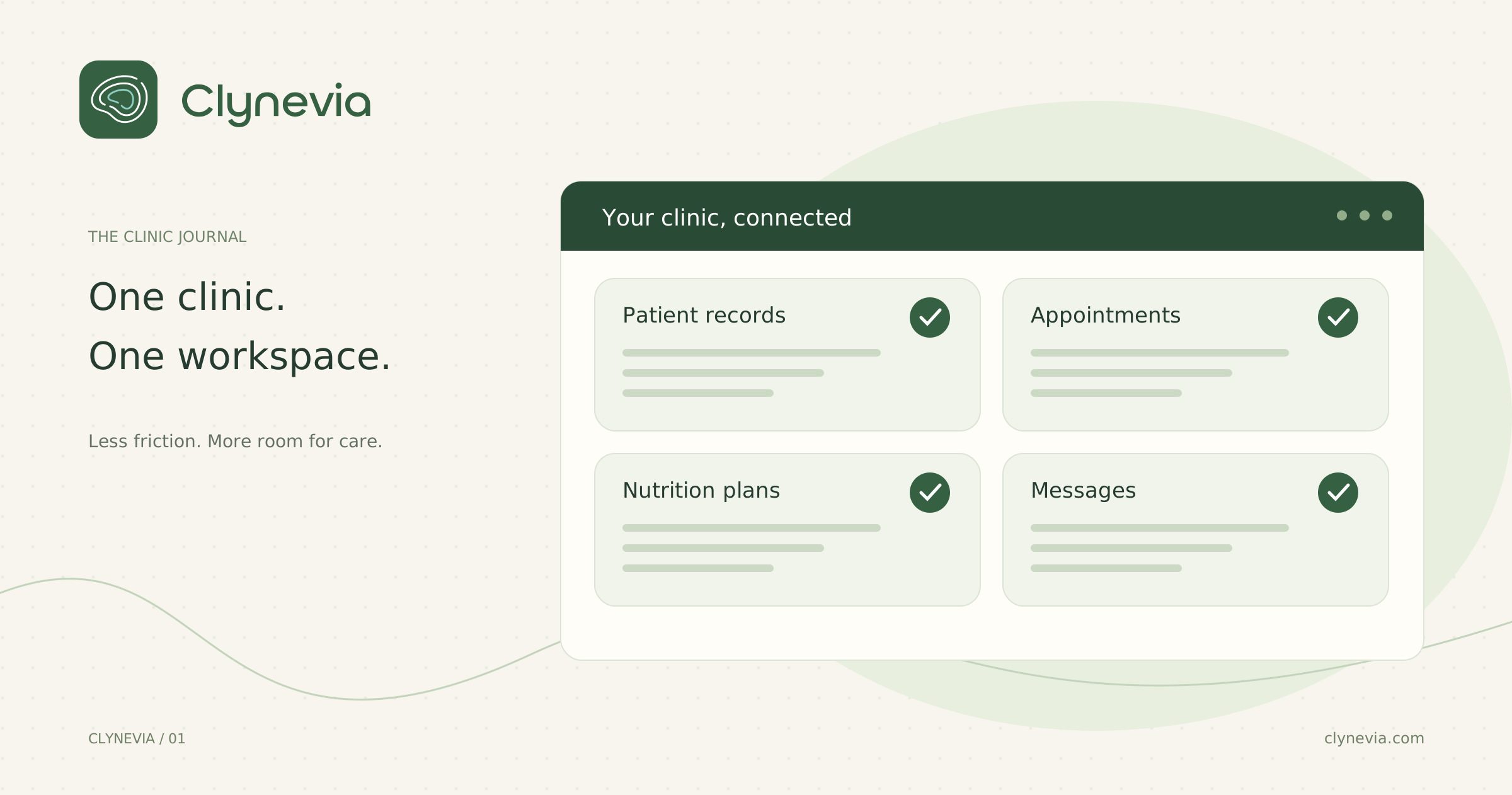
- Patient data, plans, and appointments in one place — without copying anything between tools.
- A per-gram food database built on local foods — mujaddara, maqluba, falafel, mansaf — so the math is part of the system, not extra work and not a separate hired helper.
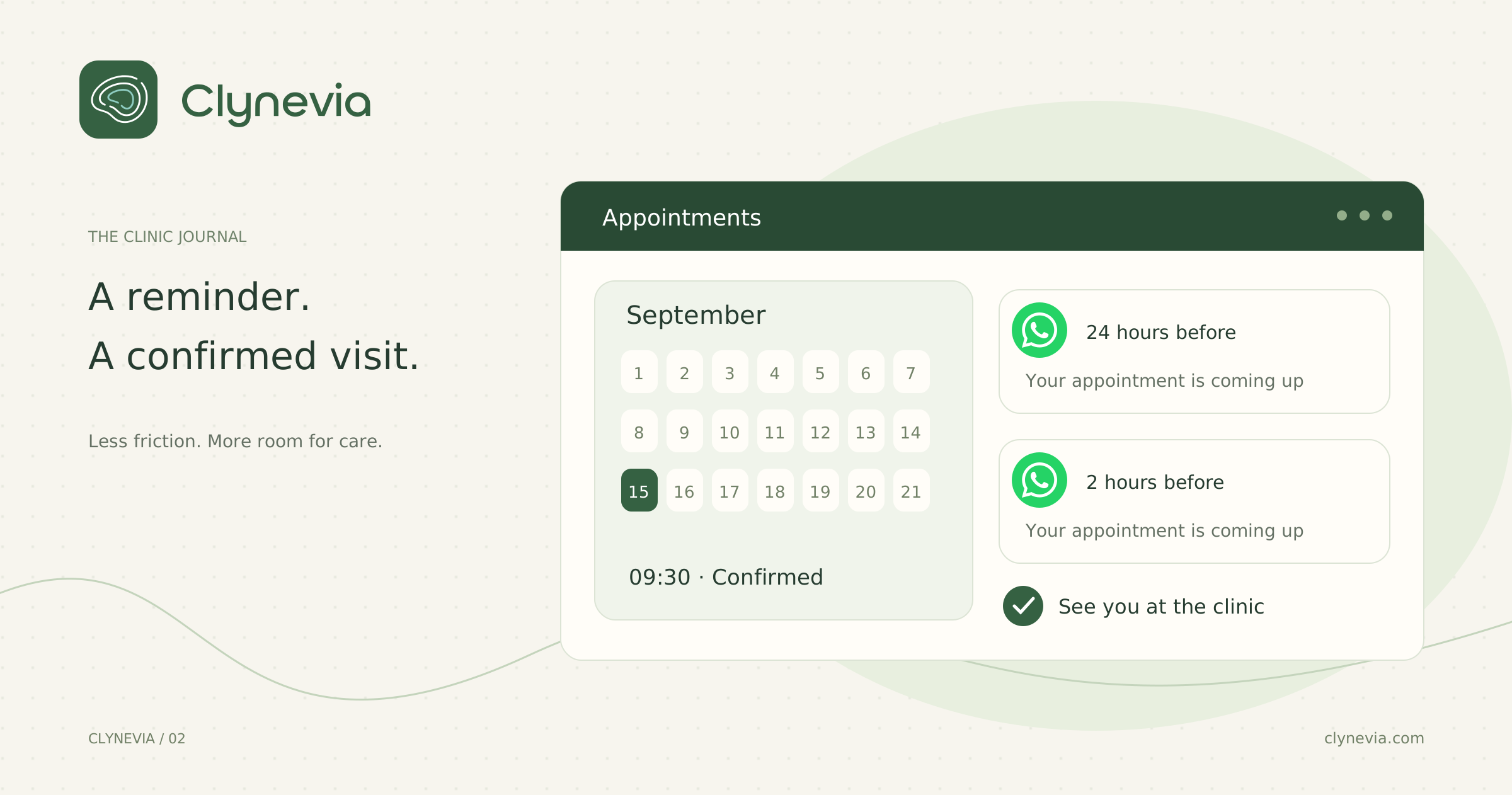
- Automatic plan delivery and reminders over WhatsApp — the patient gets their plan immediately, and a reminder before their next appointment without you opening WhatsApp.
- A print template that reflects your professional identity — ready every time without redesigning it. A professional look that represents you.
This is exactly the direction Clynevia is built on: not one more tool added to your five, but the one place that brings them together. Designed from the ground up for independent nutrition specialists — Arabic-first, with local foods, and WhatsApp delivery built in.
Three steps to get started
You don't have to overhaul your entire system in one day. The steps are practical:
- Add your patients and your go-to foods — the system comes with a local food database ready to use, and you can add any custom items specific to your practice.
- Build your first per-gram plan — directly in the system, without spreadsheets or a calculator.
- Deliver the plan via WhatsApp in one tap — the patient gets a direct link, no PDF download, no manual send.
How to make the switch without stopping your practice
Consolidating doesn't have to be a single big decision. Start with whatever's eating the most time — usually plan-building or reminders — and run it alongside your current setup for two weeks with new patients before migrating your full archive.
No contract, no long-term commitment. Try it with three or four new patients, and see if it actually saves you time. If it works — migrate the rest. If not — your data is yours and you can export it anytime.
The goal isn't perfection on day one. It's getting your evenings back.
FAQ
01How do I know if my practice has actually outgrown its current tools?+
A few honest signs: you open more than three tools to finish a single patient's plan, the same piece of information travels through different channels, or some patient details only exist in your memory rather than in any system.
02Do I have to migrate all my existing patients at once?+
No. A lower-risk approach is running a new system alongside your current setup for new patients only, for a couple of weeks, before deciding whether to bring your full patient archive over.
03What happens to my data if a consolidated system isn't for me?+
With Clynevia, your data is yours — you can export it at any point, so trying a new workflow isn't a one-way door.
04Does a per-gram food database replace a specialist's clinical judgment?+
No — the database automates the math (portions, macros, local foods), but clinical decisions about a patient's plan remain entirely the specialist's call.
05Is this only useful for very busy practices?+
The fragmentation problem tends to show up more as a practice grows, but even a newer or smaller practice can benefit from keeping patient data, plans, and appointments in one place from the start, rather than untangling it later.